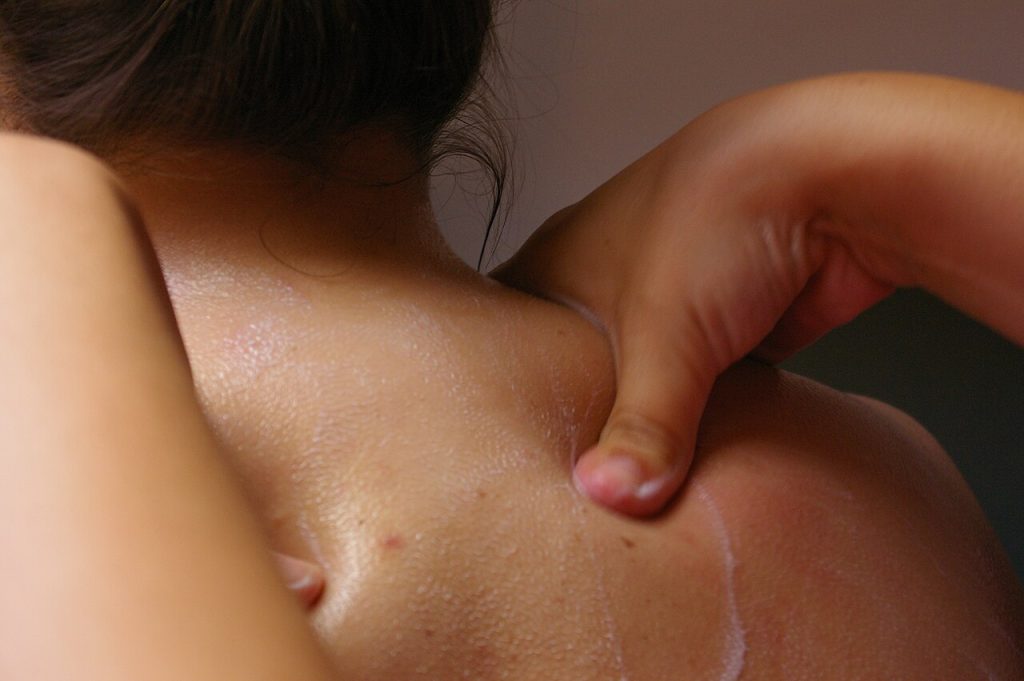
The research on massage for neck pain is more nuanced — and more honest about its limits — than most articles suggest. Here’s what the science actually shows.
For most people, neck pain is a temporary annoyance — a few days of stiffness after sleeping wrong or staring at a screen too long. But for millions, neck pain becomes a chronic problem that affects work, sleep, and quality of life.
Massage is one of the most popular things people try for a sore neck. It makes intuitive sense: tight, painful muscles seem like something a good rub should fix. But does the evidence actually support it?
The answer, as with many things in massage research, is: it’s not as straightforward as you’d think.
What the best evidence shows
The most rigorous evidence comes from a 2024 Cochrane systematic review — the gold standard in evidence-based medicine. Cochrane reviews are known for their strict methodology and conservative conclusions, so their findings carry more weight than an individual study.
Led by Gross and colleagues, this Cochrane review analyzed 33 randomized controlled trials involving 1,994 participants and compared massage against placebo, no treatment, and other active therapies for subacute-chronic neck pain Note 1.
The headline finding: low-certainty evidence indicates that massage probably results in little to no difference in pain, function-disability, and quality of life when compared against a placebo for neck pain at up to 12 weeks follow-up Note 1.
Study
Massage probably results in little to no difference in pain, function-disability and quality of life when compared against placebo.
n=1994 · Cochrane systematic review, 33 RCTs · up to 12 weeks follow-up · 2024
That sentence deserves a close read. “Low-certainty evidence” means the reviewers aren’t confident enough to make strong conclusions — not that massage definitely doesn’t work. It’s a statement about the quality of the research, not necessarily about the therapy itself.
And there were some positive signals: a subgroup analysis found a clinically important difference favouring a high dose — defined as eight or more sessions over four weeks, each lasting at least 30 minutes Note 1. In other words, when people received enough massage, it seemed to help more. But the overall evidence quality remains low.
Evidence grade: Low (Cochrane GRADE). The review itself is high-quality; the included studies are not.
Massage vs. standard treatments
A companion systematic review from the same Cochrane group, published later in 2024, looked at a different comparison: massage versus standard non-surgical treatments (like exercise, education, and pain medication) Note 2. This review included 42 studies with 2,656 participants and found very-low to moderate-certainty evidence for pain reduction depending on the comparison.
This distinction matters. Massage may not outperform a well-designed placebo, but when compared against what most people actually do for neck pain — take over-the-counter pain relievers, rest, or do nothing — the evidence is more favourable. The authors noted that the evidence was limited by imprecision and the fact that 67% of the included studies had a high risk of bias Note 2.
Evidence grade: Very-low to moderate (GRADE). Consistent direction of benefit, but quality concerns limit confidence.
What about specific massage techniques?
Not all massage is the same, and researchers have been asking whether certain techniques work better for neck pain.
Myofascial release and connective tissue massage
A 2023 systematic review specifically examined “Western massage therapies” — myofascial release therapy (MFR) and connective tissue massage (CTM) — for neck pain Note 3. The authors identified 8 eligible studies and concluded that MFR and CTM “may improve neck pain,” but the evidence base is small and studies only measured short-term effects Note 3.
Importantly, these Western massage techniques were not superior to other active treatments like exercise or joint mobilization. That’s actually useful information: it suggests that the specific technique may matter less than the fact of receiving some form of hands-on or active treatment.
Evidence grade: Low. 8 studies, mixed quality, short-term outcomes only.
Classic massage, connective tissue massage, and joint mobilization
A 2026 randomized controlled trial compared three manual therapy approaches — joint mobilization, classic massage, and connective tissue massage — in 90 patients with chronic neck pain, with all groups also receiving cervical stabilization exercises Note 5. After four weeks:
- All three groups improved significantly in pain, range of motion, and function (p < 0.05).
- Classic massage specifically increased pressure pain threshold — meaning it reduced muscle tenderness — more than the other techniques.
- Joint mobilization and CTM showed advantages for balance and quality of life.
The key takeaway: different techniques all help, but they may help in different ways. Massage appears particularly good at reducing muscle tenderness, while joint-focused techniques may offer broader functional benefits. And again, everyone in this study also did stabilization exercises — reinforcing the pattern that massage works best as part of a broader treatment plan.
Evidence grade: Moderate (single well-designed RCT, 90 participants, active comparators).
Percussion massage for cervical disc herniation
A double-blind RCT from 2025 looked at a newer technique: percussion massage therapy (using a hand-held percussive device) and instrument-assisted soft tissue mobilization (IASTM) in 57 people with cervical disc herniation — a specific diagnosis where disc material presses on nerves, causing neck and arm pain Note 7.
Both percussion massage and IASTM produced greater improvements in pain, fear of movement, and joint position sense compared to conventional therapy alone, with large effect sizes. The percussion massage was applied at 33-40 Hz for 3 minutes per muscle group, three times per week for three weeks.
This is interesting because it’s one of the few double-blind trials in massage research (neither the assessors nor the participants knew who was in which group). It also suggests that mechanical vibration massage may have specific benefits for people with nerve-related neck pain.
Evidence grade: Low-moderate. Single RCT, specific population (disc herniation), but well-designed and double-blind.
Massage plus exercise: the combination that works best
A consistent pattern emerges across all the neck pain research: massage combined with exercise consistently outperforms either treatment alone.
A 2025 network meta-analysis of 101 RCTs involving 7,633 participants found that multimodal treatment — the combined use of two or more approaches — was the most effective intervention for reducing neck pain intensity and disability Note 4. Manipulation was best for improving cervical range of motion, but for pain and function, combining techniques worked better than any single approach.
A 2026 RCT adds to this picture: cervical stabilization exercises combined with Thai self-massage produced significantly greater improvements in pain and neck disability than stretching alone in 50 young adults with chronic nonspecific neck pain Note 6.
The practical implication: if you’re considering massage for neck pain, the best approach is likely to combine it with specific exercises prescribed by a physical therapist or other qualified practitioner. Massage can reduce pain and muscle tension in the short term; exercise builds the strength and endurance needed to keep the problem from returning.
How does this compare to other pain conditions?
This is an important point that most articles don’t address: the evidence for massage in neck pain is weaker than for low back pain Note 1.
A 2015 Cochrane review on massage for low back pain found that massage may reduce pain at short-term follow-up, on evidence rated low to very low quality Note 8. The neck pain evidence, by contrast, is more limited, with more studies showing small or uncertain effects.
Why the difference? It may be that neck pain has more varied causes — everything from poor posture to disc problems to whiplash — making it harder for a single approach to show consistent results across all types. It may also reflect a smaller, lower-quality research base for neck pain specifically.
What the evidence does NOT support
As with every article on this site, being honest about limitations matters:
- Massage has not been proven as a standalone treatment for neck pain. The best available evidence shows it may help, especially with adequate dose and in combination with exercise, but the certainty is low.
- No single massage technique has been proven superior. While MFR, CTM, classic massage, and percussion massage all show positive signals, head-to-head comparisons are rare and results are mixed.
- The “adequate dose” is higher than most people think. The best signal from the Cochrane review was with ≥8 sessions over four weeks, each ≥30 minutes. A single massage is unlikely to produce lasting change for chronic neck pain.
- Massage doesn’t outperform other active treatments. Exercise, joint mobilization, and physical therapy all show similar or better results. The advantage is in combining approaches, not choosing one over another.
- The long-term effects of massage for neck pain are unknown. Almost all studies measure outcomes at ≤12 weeks. Whether effects last months or years is an open question.
- Most neck pain studies have significant methodological problems. Over 60% of trials have high risk of bias, which means the results may overestimate benefits Note 4.
When to see a doctor
Most neck pain is mechanical and will improve with time, gentle movement, and conservative care. But neck pain can sometimes signal something more serious. Seek medical attention if you experience:
- Neck pain following a fall, car accident, or head injury
- Pain that radiates down your arm with numbness, tingling, or weakness
- Neck pain accompanied by fever, headache, or unexplained weight loss
- Difficulty with coordination or walking
- Loss of bladder or bowel control (rare, but requires emergency care)
Massage is not appropriate for acute injuries, fractures, infections, or unstable spine conditions. If you’re unsure about the cause of your neck pain, see a healthcare provider before booking a massage.
The bottom line
The evidence for massage in neck pain is real but limited. The Cochrane review — the most trustworthy source — describes it as “low-certainty evidence” showing massage probably makes little difference compared to placebo, though adequate dosing (more sessions, longer duration) may change that picture.
When compared against what most people actually do for neck pain (rest, painkillers, or nothing), the evidence is more favourable. And when massage is combined with exercise, the results are consistently better than either approach alone.
For someone considering massage for neck pain, the most evidence-supported approach is:
- Schedule enough sessions. The data suggests at least 8 sessions over a month, each lasting 30 minutes or more.
- Combine with exercise. Work with a physical therapist or qualified exercise professional to address the underlying muscle strength and endurance issues.
- Choose a therapist with experience in neck pain. Not all massage therapists are equally skilled in treating neck issues.
- Keep realistic expectations. Massage can reduce pain and muscle tension, but it’s one tool in a broader management plan — not a cure.
References
- Gross AR, Lee H, Ezzo J, Chacko N, Gelley G, Forget M, Morien A, Graham N, Santaguida PL. Massage for neck pain. Cochrane Database of Systematic Reviews. 2024 Feb 28. PMID: 38415786.
- Lee H, Gross AR, Chacko N, Ezzo J, Goldsmith CH, Gelley G, Forget M, Lee S, Jeong H, Dixon C, Santaguida PL. Massage for neck pain contrasted against standard (non-surgical) treatment: A systematic review update. Journal of Bodywork and Movement Therapies. 2024 Oct;40:385-396. PMID: 39593614.
- Mete O, Kaya DO, Keskin M, Celenay ST. Western Massage Therapies in the Management of Neck Pain: A Systematic Review. Journal of Manipulative and Physiological Therapeutics. 2023 Jan;46(1):37-51. PMID: 37422753.
- Gong Z, Liu W, Gao Y, Chen S, Feng X, Li J, Li W, Wu X. Effectiveness of musculoskeletal manipulations in patients with neck pain: a systematic review and network meta-analysis. BMJ Open. 2025 Oct 13;15(10):e098682. PMID: 41083306.
- Toprak Celenay S, Tanik F, Ozer Kaya D. Comparison of Different Manual Therapy Techniques in Patients With Chronic Neck Pain. Pain Management Nursing. 2026 Jun. PMID: 41314917.
- Buttagat V, Mathong W, Kongchana M. An Integrated Cervical Stabilization Exercise and Thai Self-Massage Approach for Managing Chronic Nonspecific Neck Pain in Young Adults: A Single-Blind Randomized Controlled Trial. International Journal of Environmental Research and Public Health. 2026 Jan 16. PMID: 41595904.
- Menek B, Dansuk E, Gorguluer S. Instrument-assisted soft tissue mobilization and percussion massage therapy in cervical disc herniation: a randomized controlled study. Journal of Orthopaedic Surgery and Research. 2025 Aug 30. PMID: 40886005.
- Furlan AD, Giraldo M, Baskwill A, Irvin E, Imamura M. Massage for low-back pain. The Cochrane Database of Systematic Reviews. 2015 Sep 1. PMID: 26329399. DOI: 10.1002/14651858.CD001929.pub3.
This article is for informational purposes only and does not constitute medical advice. Neck pain can have serious causes. Consult a healthcare provider before starting any new therapy, especially if your neck pain follows an injury or is accompanied by neurological symptoms.
Leave a Reply